Pediatric Hematology and Oncology
.jpg) |
.jpg) |
.jpg) |
|
Director |
Attending physician
|
Attending physician
|
|
Specializations:
|
Specializations:
|
Specializations:
|
|
Pediatric Hematology and Oncology |
|||||
|
|
Pediatric Hematology and Oncology focuses on treating hematologic disorders and malignant tumors in children and adolescents. Common diseases presenting with pallor, anemia, bleeding, bruises, and enlarged lymph nodes, and various concerning childhood cancers both fall within the expertise of pediatric hematology and oncology. Although the incidence of childhood cancer in Taiwan is only about one in ten thousand, it ranks fourth in the causes of death for children under 18 years of age and third for those aged 12-17. If you have any concerns in this area, please seek the assistance of pediatric hematology and oncology to ensure the health of your child. |
||||
|
Integrated Treatment for Bone Cancer and Soft Tissue Sarcoma |
|||||
|
|
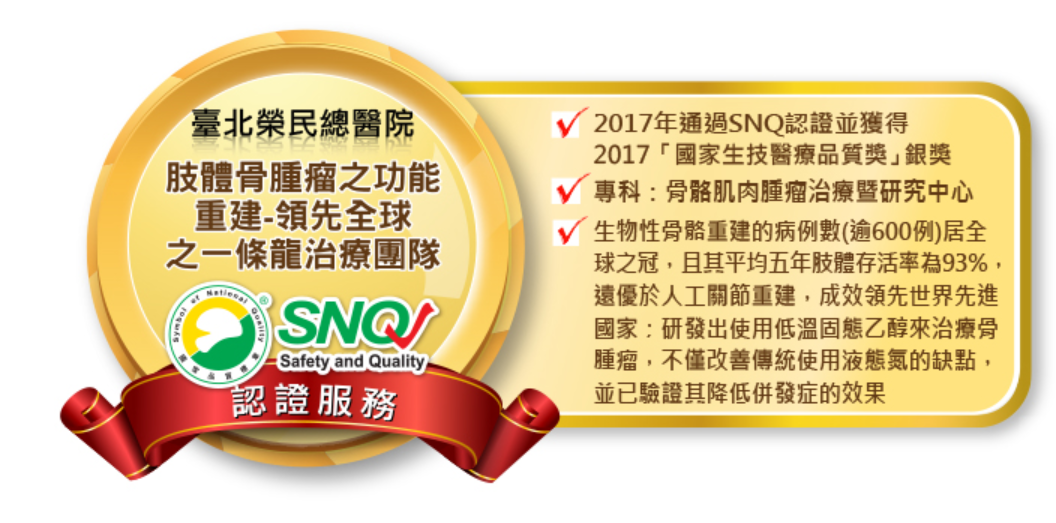
(1) Professional and Comprehensive Bone Cancer Care Team The treatment of bone and soft tissue cancers requires close collaboration between pediatric oncologists and orthopedic surgeons. Since 1998, we have been working together with orthopedic surgeons to provide the best treatment for those patients. Today, our multi-disciplinary bone cancer team at Taipei Veterans General Hospital has become the most experienced one in Taiwan for taking care patients with bone and soft tissue tumors. We work together with other specialists, including radio-oncologists, interventional radiologists, bone pathologists, nuclear medicine doctors, nurses, and social workers to provide patients with a tight network of delicate care.
(2) Actively Developing Precision Medicine to Reduce Chemotherapy Side Effects in Malignant Bone and Soft Tissue Tumor Patients Precision medicine is one of the important advances in medicine nowadays. Our pediatric hematology-oncology department, together with the pediatric genetics and metabolism department and the ear, nose, and throat department, has developed testing for genes related to ototoxicity, nephrotoxicity, and drug resistance. By testing those genes related to chemotherapy toxicity and predicting possible toxicity based on patient or tumor characteristics, we can develop personalized care plans through shared decision-making between patients and healthcare providers. (3) Actively Conducting Clinical Trials for Bone and Soft Tissue Tumors We are actively conducting clinical trials for new drugs for bone and soft tissue tumors. Several international multi-institutional clinical trials enrolling recurrent bone and soft tissue tumors for breakthrough targeted therapies has been or is recruiting the patients in our hospital. |
||||
|
Hematopoietic stem cell transplantation |
|||||
|
|
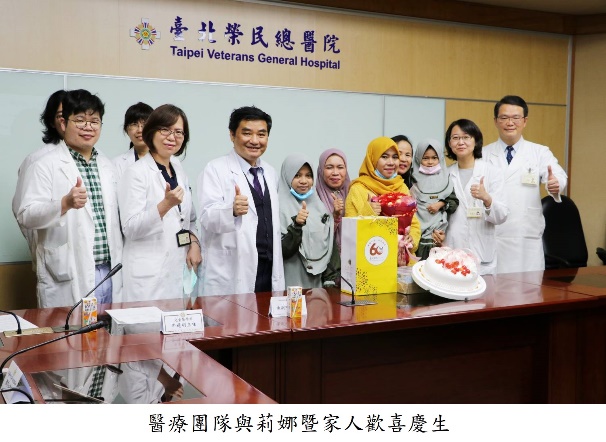
(1) The outcome of transplanting children with high-risk brain tumors and sarcomas is outstanding in Taiwan. Our Children's Brain Tumor Integrated Treatment Team in Taipei Veterans General Hospital, which has been operating for many years, is the most comprehensive brain tumor treatment team in Taiwan. The treatment outcome is comparable to world-class children's cancer center. The integrated conference for children's brain tumors is regularly held, which involves pediatric neurosurgeons, pediatric neurologists, pediatric oncologists, neuro-radiologists, and radio-oncologists, to provide integrated evaluation and treatment recommendations for children with brain tumors, as well as provide comprehensive long-term follow-up services for patients after treatment. For patients with high-risk embryonal malignant brain tumors or extremely young children with malignant brain tumor, we provides high-dose chemotherapy with autologous hematopoietic stem cell transplantation for better cure. Since 2009, autologous stem cell transplantation has been included in the treatment plan for brain tumor care. In the past 20 years, autologous hematopoietic stem cell transplantation has been performed in about 50 patients for a total of near 100 times, with clearly beneficial results, which can help reduce or delay the use of radiotherapy in young and vulnerable children. Currently, the transplant team is most experienced for treating childhood high-risk brain tumors with tandem transplant in Taiwan, and our results have been published in medical societies and journals both domestically and internationally, and have won various awards and certifications. (2) The technique of pediatric stem cell transplantation is mature, and allogeneic stem cell transplantation for rare hematologic disorder has achieved leading results in Taiwan. Leukemia is the most common malignancies in children, and the treatment is chemotherapy. For high-risk and relapsed patients, the definite treatment is allogeneic hematopoietic stem cell transplantation. Currently, in collaboration with adult hematology division and transfusion medicine division, more than 120 cases of pediatric allogeneic, unrelated, haplo-identical and cord blood stem cell transplantation have been performed within ten years. In addition, juvenile myelomonocytic leukemia (JMML) is an extremely rare childhood leukemia with poor response to all chemotherapy treatments. The only cure is allogeneic hematopoietic stem cell transplantation in most of the patients. We has previously successfully treated several cases and published results in medical societies both domestically and internationally, receiving positive responses. Subsequently, many children from China, Vietnam, Indonesia, and other area in Taiwan, were referred to our hospital for allogeneic transplant. The transplant experiences and results for JMML are good and comparable to those abroad.
|
||||
|
Beyond Cancer Cure, Prospective Multidisciplinary Follow-up After Treatment Completion Although surgery, chemotherapy, radiotherapy or stem cell transplantation can bring beneficial outcomes in children with malignancies, particularly autologous stem cell transplant can help reduce or delay radiation to the central nervous system in very young children with brain tumor by effectively reducing radiation-induced central nervous system damage. Those patients who survive through cancer treatment and attain long-term cure may still experience various organ damage, including memory, psychological, cognitive, endocrine, infertility and hearing damage. Our hospital also provides comprehensive and delicate long-term follow-up and evaluation after treatment complete, taking into account every aspect of the child's health beyond the disease and along the way of their life journey. |
|||||
|
Continuing to promote childhood cancer treatment and care in Taiwan |
|||||
|
|
In addition to caring for children at Taipei Veterans General Hospital, we are also committed to promoting the treatment of all cancer children in Taiwan. Director Hsiu-ju Yen serves as the leader for the long-term follow-up program for pediatric cancer survivors in our hospital and has developed TPOG guidelines for the national follow-up of pediatric cancer survivors in Taiwan. Dr. Giun-Yi Hung and Chih-Ying Lee serve as the project leaders for the TPOG Childhood Bone Cancer Program and has formulated guidelines for the diagnosis and treatment of childhood bone cancer in Taiwan. |
||||
Department of Pediatrics - Pediatric Hematology-Oncology, Taipei Veterans General Hospital
Last Modified: